
Asset-Backed Credit
The shift from bank financing to private credit is part of a long-term trend since the 2008 financial crisis, driven largely by regulation. Basel III and now the implementation of the Basel Endgame (Basel IV) have forced banks to raise capital adequacy and become more selective in extending credit. As a result, banks are cutting back on loans with high capital requirements and tend to retain only credit that is strategic for them. These constraints create a “vacuum” that private debt steps in to fill: non-bank players partner on new credit transactions or acquire loan portfolios, thereby freeing up capital for the bank, or provide financing to sectors from which the bank has withdrawn.
The asset-based finance (ABF) market is growing rapidly, against the backdrop of banks retreating from loans that do not serve their strategic objectives and the expanding activity of non-bank lenders – private credit funds, insurance companies and institutional investors – that are filling the resulting gap. The space today offers a wide range of financing solutions, from digital infrastructure and data centers to consumer credit and non-conventional mortgages.
Key sectors in asset-backed credit:
Asset-backed credit spans a wide range of assets, but there are four key sectors: residential mortgages, consumer credit, aviation finance and data infrastructure. Below is a brief look at each:
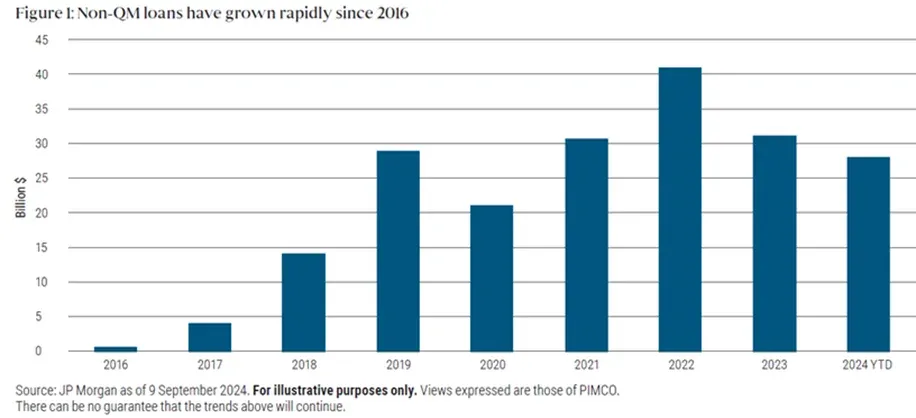
- Residential mortgages (Non-QM): Loans that fall outside standard mortgage programs (Non-QM) have become a growing and significant segment of the U.S. housing market. Lending volumes in this segment have grown rapidly since 2016, thanks to strong demand from “non-standard” borrowers and supportive conditions such as low LTV ratios and limited housing inventory. As a result, these loans represent an attractive avenue for private credit providers in the mortgage market.
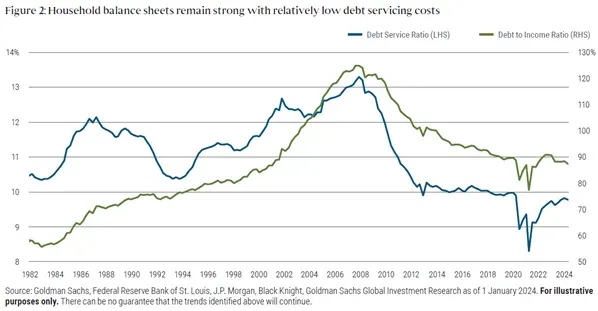
- Consumer credit: Non-mortgage consumer credit, with more than $17 trillion of U.S. household debt (personal loans, student loans and credit cards). Despite higher interest rates, the U.S. consumer balance sheet remains strong: the debt-to-income ratio has declined in recent years, and debt service costs remain historically low thanks to the share of fixed-rate mortgages. The consumer lending sector therefore appears to benefit from stable fundamentals, although careful analysis is required to separate strong borrowers from weak ones in an uncertain economic environment.
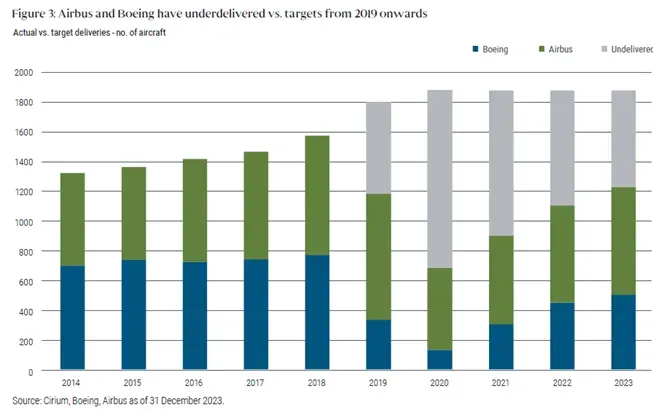
- Aviation finance: The need for financing in the aviation sector is rising on the back of the recovery in global travel. On the other hand, the supply of new aircraft is constrained by production delays: between 2019 and 2023, Boeing and Airbus delivered approximately 4,200 fewer aircraft than planned – about 35% below the cumulative delivery target. This imbalance between demand and supply allows investors in the space to earn high returns on aircraft leasing contracts, although success in the sector requires expertise and specialized asset-risk assessment capabilities.
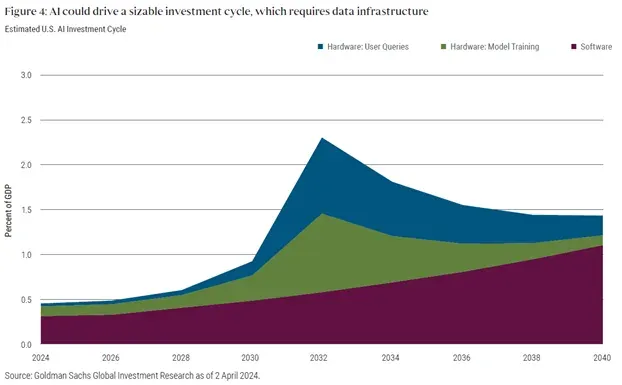
- Data infrastructure: Demand for data centers and technology equipment (e.g., AI chips) is surging in the era of artificial intelligence and the cloud. According to estimates, AI-related investment could reach approximately 2.5%–3% of U.S. GDP within about a decade – an enormous volume requiring substantial financing. Banks currently have a limited presence in this sector, particularly in financing the acquisition of advanced equipment. This gap creates an opportunity for private credit providers to offer tailored financing, with the digital assets (servers, chips and more) serving as collateral for the transactions.
Alongside the potential of this space, there are also several risks to take into account:
Return vs. complexity – when the risk no longer justifies the reward:
In periods of a hot market and heightened competition for deals, it is easy to get swept up by FOMO and adopt overly optimistic assumptions about risk. At times, market consensus and even official credit ratings create a reassuring picture that obscures the risk embedded in the financial structure. But a disciplined investor must recognize when he is “drifting” beyond the skew of his ability to assess the risk. Ares notes that in today’s changing market, with new and sophisticated transactions, it is important to know when to stop – when the complexity of a transaction exceeds the investor’s understanding or experience, even when the temptation of a high return is there. After all, in debt financing the primary objective is to avoid losses, not to maximize profit at any cost. It is therefore better to pass on an opportunity that is not fully understood than to suffer a tangible capital loss later on.
Competition from institutional investors:
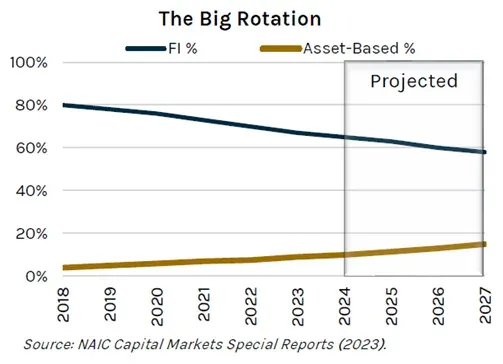
On the investor side, too, there are constraints that affect the market. Many institutional investors – insurance companies, for example – are subject to regulatory and internal limits that restrict their ability to invest in high-risk debt. Most insurance companies limit their exposure to non-investment-grade (Non-IG) assets to only about 5% of the portfolio. The trend is quite clear: a dramatic increase in institutional capital allocation to alternative asset-backed credit is expected in the coming years. Forecasts indicate that insurance companies alone will double their investment in the space by 2027, and the additional capital could reach approximately $900 billion. However, the race for safe assets is creating fierce competition for a relatively limited supply: a large part of the public ABS market consists of AAA-rated debt tranches, where spreads and yields are low, at times similar to or even below the yields on BBB-rated corporate bonds. In any case, the investment constraints of institutional investors create a paradox: they channel substantial capital toward a relatively small slice of the loan market, which drives up prices and compresses returns, thereby forcing investors to work harder – compromising on liquidity, understanding more complex structures – to achieve the same excess return that in the past came much more easily.
Fewer rights and less influence over the borrower compared with direct lending:
Compared with direct lending (loans made directly to companies), asset-backed investments benefit from tangible collateral and broader risk diversification (for example, a portfolio of loans rather than a single borrower). In addition, in the current market they offer more attractive risk-adjusted spreads. On the other hand, in corporate debt lenders often obtain rights and influence over the borrower, whereas in asset-backed structures the investor relies primarily on the loan contracts and the asset as collateral.
Summary:
Asset-backed credit in 2025 holds opportunities, but it also puts investor discipline to the test. Recent history – from examples such as Spirit Airlines to institutions’ chase for yield – reminds us that real risk does not disappear simply because it is packaged in an innovative way. In an environment of high interest rates and a growing appetite for alternative assets, it is easy to be tempted by complex transactions out of fear of “missing the party.” Professional investors must overcome impulsiveness or FOMO and act with rigorous credit discipline: analyze every hybrid investment structure in depth, identify where the risks are hidden, and decide with a cool head when the reward no longer justifies the level of risk. Put simply, it is worth remembering that even in an era of financial innovation, the fundamental principles of risk management do not change – it is better to miss an opportunity than to incur a painful loss.
Disclaimer:
Nothing in this publication constitutes an offer to the public or an invitation to invest of any kind; it is a publication and presentation of general information only. This article and its contents rely on information and published data received from third parties, which were assumed to be accurate without the company having examined or verified their accuracy. The information presented in this publication does not constitute investment advice/investment marketing, nor is it a substitute for investment advice/investment marketing tailored personally and specifically to each person, taking into account their data, needs, financial situation, circumstances and investment objectives.
Sources:
Ares Management – Alternative Credit Newsletter: In the Gaps, Winter 2025.
PIMCO – Alternatives Investment Outlook, December 2024.