
Between Financial Flexibility and a Warning Light: NAV Financing
Private equity funds are taking out loans they “don’t really need”: what is happening in the investment market?
Why does this matter now?
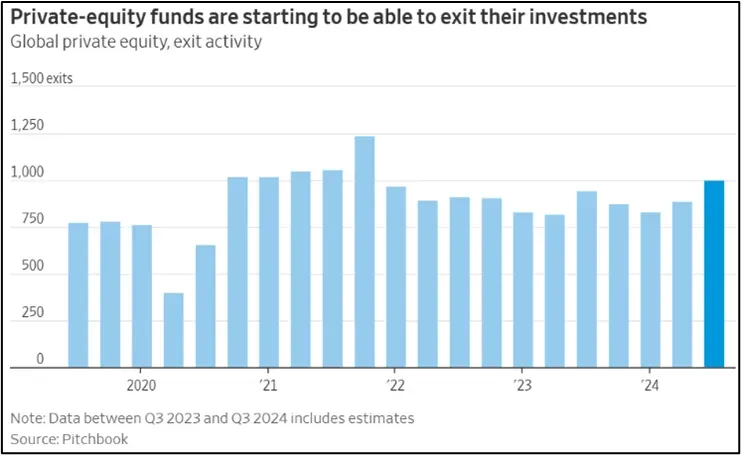
The rapid wave of rate hikes in recent years has pushed the private equity market into a challenging period. With exits delayed and the IPO market frozen, private equity managers are looking for creative ways to provide liquidity to their investors. Financial innovation can be beneficial, but at times it tends to create conflicts of interest. One such recent phenomenon is gaining momentum in the private fund world: borrowing at the fund level against the value of its assets, simply to pass cash on to investors instead of selling assets.
NAV loans: a temporary fix that became a trend:
A NAV (Net Asset Value) loan is a loan a fund takes using the value of its investment portfolio as collateral. In a period of high interest rates and plunging private company valuations, successful exits are hard to achieve. NAV loans allow a fund to “buy time”: to borrow money instead of selling a company at a loss, and so wait for valuations to improve in the future.
Use of these loans has soared. According to Citco data, NAV lending volume grew by about 30% per year between 2019 and 2023. The market was estimated at $100 billion in 2022 and is expected to reach $600 billion by 2030. These loans carry high interest rates (above 10%) but conservative leverage (LTV ratios of only 10%-25%). Not surprisingly, dedicated lenders have emerged in the space, such as Dawson Partners and 17Capital (owned by Oaktree), which specialize in providing credit against fund assets.
Where is the money going?
The WSJ article reveals interesting data on how the proceeds of these loans are used. About 80% of the money raised through NAV loans was reinvested in portfolio companies, for example to help finance add-on acquisitions or as working capital for companies during a challenging period. In these cases, the loan serves as a bridge for leveraging and enhancing the investments, in the hope of repaying the debt in the future from a more successful sale. However, about 20% of the loans were used to distribute cash to investors (LPs): not as direct financing for companies, but as an interim distribution to the fund’s investors. In other words, the managers (GPs) took out a loan in order to distribute money to investors without selling assets at less favorable timing.
Such a move can be seen as brilliant, but it is also controversial: it allows managers to show investors a quick return of capital and perhaps temporarily improve performance metrics, but it introduces risk and debt at the fund level. After all, the loan has to be repaid out of the fund’s future profits. If the portfolio companies are not sold at a high enough value, the fund may find itself with a large debt that will hurt its final return.
Trends and implications: between financial flexibility and a warning light:
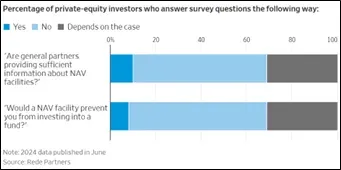
The NAV lending trend was born out of necessity, but it may well continue once the market returns to normal. Fund managers have adopted a flexible new tool. However, investors need to look at the less glamorous side: the lack of transparency and the conflicts of interest that may come with it. In a Rede Partners survey, 59% of investors said that fund managers do not provide sufficient information about NAV loans, and in some cases advisory committees are not even asked to approve their use.
Paradoxically, many investors do not “penalize” funds for using debt. About 61% of them responded that the presence of a NAV loan in a fund would not deter them from a future investment. This means the industry, funds and investors alike, sees these loans as a legitimate solution when needed.
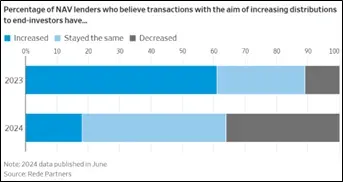
Recent data show a sharp decline in 2023 in the use of loans for cash distributions: only 3% of NAV loan volume was used for “money-out” transactions (distributions to investors), compared with 24% in 2022. The pressure to distribute cash appears to have eased, perhaps thanks to some improvement in the markets. Most investors prefer that the loans be reinvested in portfolio companies rather than used for early returns of capital. In other words, the market is starting to use the tool in a more measured and responsible way, viewing it as a liquidity bridge for exceptional cases only.
Summary:
NAV loans epitomize the creativity born of the crises of recent years. They gave funds a lifeline to avoid fire sales of assets and pumped “oxygen” into promising companies. On the other hand, they added a layer of debt and risk to the investment model. Family office managers, investors and financial entrepreneurs should carefully examine the use of this tool: is it a smart bridging strategy, or a cover for deeper problems in the portfolio? The key is transparency and balance: using the tool only when the benefit clearly outweighs the cost and the risk.
Disclaimer:
Nothing in this publication constitutes an offer to the public or an invitation to invest of any kind; it is a publication and presentation of general information only. The article and its content rely on information, publications and data received from third parties, which were assumed to be accurate without the company having examined or verified their accuracy. The information presented in this publication does not constitute investment advice/marketing or a substitute for investment advice/marketing tailored personally and specifically to each individual, taking into account their data, needs, financial position, circumstances and investment objectives.
Source:
Otani, A. (2025, April 28). Private-equity funds are taking out loans they don’t really need. The Wall Street Journal. https://www.wsj.com/finance/investing/private-equity-funds-are-taking-out-loans-they-dont-really-need-3a390290.